
Blog

The Strategic Partnership Between AI Agencies and Businesses: Why AI Receptionists Are Your Next Profit Driver
In today's hyper-competitive business landscape, the question is no longer whether to embrace artificial intelligence — it's how fast you can implement it before your competitors do. One of the most transformative AI solutions reshaping the way businesses operate is the AI receptionist. And at the heart of making this technology accessible, scalable, and profitable is something equally powerful: the strategic partnership between AI agencies and the businesses they serve.
This article breaks down exactly how these partnerships work, what they look like in practice, and — most importantly — why your business needs an AI receptionist to maximize profit efficiency right now.
What Is an AI Receptionist?
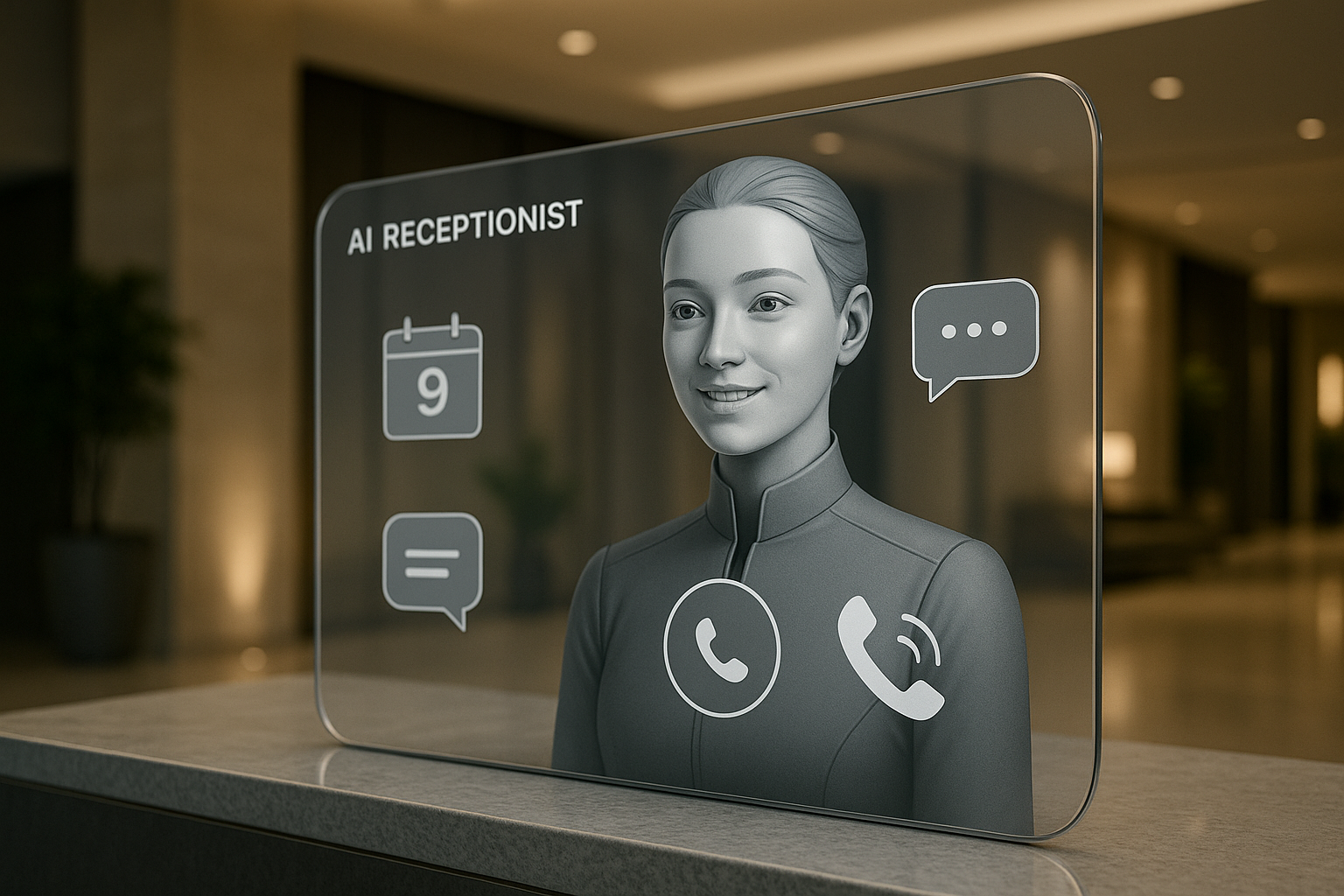
An AI receptionist is an intelligent, always-on virtual assistant that handles the communication duties traditionally managed by a human front-desk employee. It answers phone calls, responds to messages, books appointments, qualifies leads, routes inquiries, and delivers consistent, professional customer experiences — all without breaks, sick days, or overtime.
Unlike basic chatbots, modern AI receptionists are powered by advanced natural language processing, enabling them to understand intent, respond contextually, and even adapt their tone to match your brand voice. They integrate seamlessly with calendars, CRMs, and communication platforms to ensure nothing falls through the cracks.
How AI Agencies and Businesses Build Strategic Partnerships
The relationship between an AI agency and a business is not a simple vendor transaction — it's a collaborative, evolving partnership built on trust, shared goals, and measurable outcomes. Here's how the journey typically unfolds:
1. Discovery & Business Assessment
The partnership begins with a deep-dive discovery phase. The AI agency's consultants analyze the business's existing communication workflows, pain points, customer touchpoints, and growth objectives. This stage answers critical questions: Where are leads being lost? What repetitive tasks drain staff productivity? What does the ideal customer experience look like?
2. Custom AI Receptionist Configuration
No two businesses are alike, which is why cookie-cutter solutions fail. The AI agency custom-configures the AI receptionist to reflect the business's brand voice, FAQs, service offerings, booking logic, escalation protocols, and more. This is a collaborative phase where the business provides the domain knowledge and the agency provides the technical execution.
3. Seamless Integration
The AI receptionist is integrated into the business's existing tech stack — phone systems, CRM platforms, scheduling software, and messaging apps. The goal is zero disruption: the AI slots into existing workflows and amplifies them, rather than replacing them entirely.
4. Training, Testing & Refinement
Before going live, the AI is rigorously tested against real-world scenarios. The agency works side-by-side with the business to refine responses, edge cases, and handoff protocols. This phase ensures the AI receptionist performs flawlessly from day one.
5. Ongoing Support & Optimization
A strong AI agency doesn't disappear after launch. The best partnerships include ongoing monitoring, performance reporting, and continuous optimization. As the business grows and evolves, the AI receptionist grows with it — learning new services, adapting to new campaigns, and improving its responses based on real conversation data.
Why Businesses Need AI Receptionists for Profit Efficiency
Here's the bottom line: every unanswered call, every missed lead, every delayed response is money left on the table. AI receptionists eliminate that leakage entirely. Let's break down the profit impact:
💰 Dramatic Cost Reduction
A full-time human receptionist can cost a business $35,000–$55,000 per year in salary alone — before benefits, training, and turnover costs. An AI receptionist delivers the same (or superior) service at a fraction of the cost, often less than $500/month, and scales infinitely without additional headcount.
📞 Zero Missed Leads
Studies show that over 60% of callers will not leave a voicemail and will call a competitor instead. An AI receptionist answers every single call, 24 hours a day, 7 days a week — including weekends, holidays, and after hours. Every lead captured is a potential revenue opportunity.
⚡ Instant Response = Higher Conversions
Speed-to-lead is one of the most critical factors in closing deals. Businesses that respond to inquiries within 5 minutes are 21x more likely to qualify a lead than those that wait 30 minutes. AI receptionists respond instantly — every time.
🔄 Staff Productivity Multiplier
By offloading repetitive tasks — answering FAQs, booking appointments, collecting contact info — AI receptionists free your human team to focus on high-value activities like closing sales, delivering services, and building client relationships.
📊 Data-Driven Business Intelligence
Every interaction your AI receptionist handles generates valuable data: call volumes, peak inquiry times, common questions, lead sources, and more. This intelligence helps you make smarter staffing, marketing, and operational decisions.

The ROI of an AI Receptionist Partnership
Let's put real numbers to the value of an AI receptionist. Consider a mid-sized service business that receives 200 calls per month:
| Metric | Without AI Receptionist | With AI Receptionist | |
|---|---|---|---|
| Calls Answered | ~60% (business hours only) | 100% (24/7) | |
| Leads Captured | ~120/month | 200/month | |
| Avg. Response Time | 4–24 hours | Instant | |
| Monthly Staff Cost | $3,500–$4,500 | Under $500 | |
| Estimated Revenue Gain | Baseline | +30–50% from captured leads |
Ready to Transform Your Business with an AI Receptionist?
The businesses winning in today's market are the ones that move fast, leverage AI strategically, and build partnerships with agencies that know how to deliver results. Don't let another lead go unanswered, another call go to voicemail, or another dollar slip through the cracks.
Partner with our AI agency today and let's build your AI receptionist together — your profit efficiency transformation starts with a single conversation.
To speak to an outbound agent click the following link: https://api.windsorseoservices.ca/widget/form/PS6wkehwVYD1QqcGS2em
AI Voice Widgets, Strategic Partnership, Business Growth
AI Agency & Business: The Strategic Partnership Powering AI Voice Widgets
As voice AI matures into a multi‑billion‑dollar market, AI Voice Widgets are emerging as a powerful, profit‑driving layer between businesses and their customers. For leaders, the question is no longer whether to adopt voice AI, but how to do it strategically. That is where a structured partnership between an AI agency and a business becomes a genuine competitive advantage.

What AI Voice Widgets Are—and How They Work
Under the hood, modern AI Voice Widgets combine several technologies:
- Speech recognition converts the customer’s voice into text or directly into machine‑readable intent.
- Large language models and agent frameworks interpret intent, apply business rules, and decide what to do next—whether answering, asking a follow‑up question, or triggering a workflow.
- Speech‑to‑speech voice models generate a natural‑sounding reply in under 500 ms, creating a human‑like, real‑time conversation.
- Integrations connect the widget to CRMs, booking tools, ERPs, and analytics, so every interaction can update records, create tasks, or trigger follow‑ups automatically.
How an AI Agency–Business Strategic Partnership Is Formed
Deploying voice AI is not a one‑off software purchase; it is an ongoing strategic initiative. A well‑structured partnership with an AI agency typically follows these stages:
- Discovery and opportunity mapping. The AI agency interviews stakeholders, reviews call logs, chat transcripts, and service workflows to pinpoint high‑volume, high‑friction interactions. Typical targets include inbound phone calls, website inquiries, booking flows, and post‑sale support.
- Business case and ROI modeling. Using benchmarks from the voice AI market—where automated calls often cost $0.30–$0.50 versus $7–$17 for human agents—the agency models potential savings, revenue uplift, and payback period for AI Voice Widgets in your context.
- Experience and conversation design. Together, you define tone of voice, compliance requirements, escalation rules, and “happy paths” for key journeys such as lead qualification, appointment booking, or order tracking. This is where the widget starts to reflect your brand, not just generic voice AI.
- Technical integration and pilot deployment. The AI agency connects the voice widget to your CRM, calendar, payment gateway, or ticketing system, then launches a controlled pilot—often on a single channel, product line, or region—to validate assumptions with real users.
- Optimization and scaling. Based on analytics and call reviews, the agency refines prompts, adds vertical‑specific vocabulary, and tunes routing. Once KPIs are hit, the widget is rolled out across more touchpoints—website, mobile, call center, even in‑vehicle or in‑store devices.
- Ongoing governance. A joint steering group reviews performance, compliance, and roadmap quarterly. This ensures the strategic partnership continues to align voice AI investments with changing business priorities.
Roles and Benefits for Each Partner

Dark-tech modern close-up of a sleek tablet and smartphone on a glass desk showing an AI voice...Centralized dashboards let leaders track automation rates, CSAT, and voice AI ROI in real time.
A strategic partnership works because each side brings complementary strengths to the table, creating leverage that is difficult to replicate internally or with generic tools.
The AI Agency’s Role
- Technology expertise. Selecting models, orchestrating speech‑to‑speech pipelines, handling latency, and ensuring security and compliance.
- Conversation and UX design. Crafting voice flows that feel natural, on‑brand, and aligned with modern “invisible interface” expectations.
- Implementation and integration. Connecting AI Voice Widgets to your existing systems and data sources without disrupting operations.
- Continuous optimization. Using analytics, A/B testing, and industry benchmarks to improve automation rates and customer engagement over time.
The Business’s Role
- Strategic direction. Defining priority use cases, success metrics, and risk boundaries for automation versus human touch.
- Domain knowledge. Providing product expertise, regulatory requirements, and examples of real customer interactions to train and tune the voice AI.
- Change management. Aligning teams, updating scripts and processes, and ensuring staff understand how AI Voice Widgets augment—not replace—their roles.
💡 Pro Tip: Treat your AI agency like a long‑term strategic partner, not a vendor. Shared KPIs around business profit, lead conversion, and customer experience drive better decisions on both sides.
Why Businesses Need AI Voice Widgets for Profit Efficiency
Voice AI is no longer a “nice to have.” It is a direct lever on profit efficiency—doing more with the same or fewer resources while elevating customer engagement.
- Reduced overhead. According to recent industry reports, AI voice agents can handle calls at a fraction of the cost of human staff. When common inquiries, appointment bookings, and status checks are automated, you can reassign people to higher‑value work instead of expanding headcount with demand.
- 24/7 availability. AI Voice Widgets do not sleep, take breaks, or go on holiday. They answer questions at midnight, qualify leads on weekends, and support customers in different time zones without additional staffing layers.
- Improved lead conversion. Voice AI responds instantly, captures intent while it is hot, and can route high‑value prospects directly to sales or schedule callbacks. This reduces drop‑off compared with web forms or delayed email replies and shortens the sales cycle.
- Enhanced customer experience. Natural, conversational interfaces feel easier than navigating menus. With vertical‑specific tuning—whether dental, automotive, hospitality, or financial services—AI Voice Widgets answer with precision, remember context, and escalate gracefully when a human is needed.

Dark-tech modern scene of a large digital wall displaying rising revenue and profit charts...
Companies deploying voice AI at scale report double‑digit cost savings and measurable revenue uplift.
Real‑World Use Cases and ROI Examples
Across industries, AI Voice Widgets are already delivering tangible ROI by automating routine interactions and unlocking new revenue streams.
Retail and E‑commerce
A fashion retailer embeds a voice AI assistant on its mobile app and website. Shoppers say, “Find me a black blazer under $150 in size 40,” and the widget filters inventory, answers sizing questions, and guides checkout. By reducing friction, the retailer sees a 15–20% uplift in conversion on sessions where the voice widget is used, alongside fewer abandoned carts and lower live chat volume.
Healthcare and Clinics
A multi‑location dental group partners with an AI agency to deploy a vertical‑tuned voice widget across phone lines and the website. Patients can say, “Book my six‑month cleaning next Tuesday after 4 pm,” and the AI checks calendars, insurance rules, and practitioner availability. Routine calls are automated, staff time spent on the phone drops by over 40%, and no‑show rates decline because the widget also sends proactive reminders and allows simple voice‑based rescheduling.
Automotive and Mobility
An auto dealership uses AI Voice Widgets in two ways: on its website to qualify financing leads and in vehicles via voice‑enabled dashboards. Prospects ask, “What are my monthly payments if I put down $5,000?” and the AI runs scenarios against current offers. In the first six months, the dealership sees a 25% increase in finance applications initiated through voice and a significant reduction in time sales reps spend answering repetitive questions.
Hospitality and Guest Services
A hotel group implements room‑based AI Voice Widgets for guest requests—extra towels, late checkout, restaurant bookings—and a central voice interface on its website for reservations. With 24/7 automated handling of common requests, front desk staff are freed to focus on high‑touch interactions. Guest satisfaction scores rise, and internal analysis shows a 30–50% reduction in routine call handling costs, with upsell revenue increasing as the widget offers targeted add‑ons like spa slots or dining packages
Turning Voice AI into a Strategic Asset
AI Voice Widgets sit at the intersection of automation, customer engagement, and business profit. When deployed through a thoughtful strategic partnership between an AI agency and a business, they become more than a gadget—they evolve into a continuously improving, revenue‑aligned capability embedded across channels and devices.
For decision‑makers, the path forward is clear: identify the voice‑ready journeys in your organization, select an AI agency with proven domain and technical expertise, and co‑create an AI Voice Widget roadmap tied directly to ROI. In a market where voice AI is rapidly becoming standard, the businesses that move first—and partner well—will be the ones that capture the greatest share of value.
To speak to an outbound agent click the following link: https://api.windsorseoservices.ca/widget/form/PS6wkehwVYD1QqcGS2em
How AI Intake Is Transforming Property Management

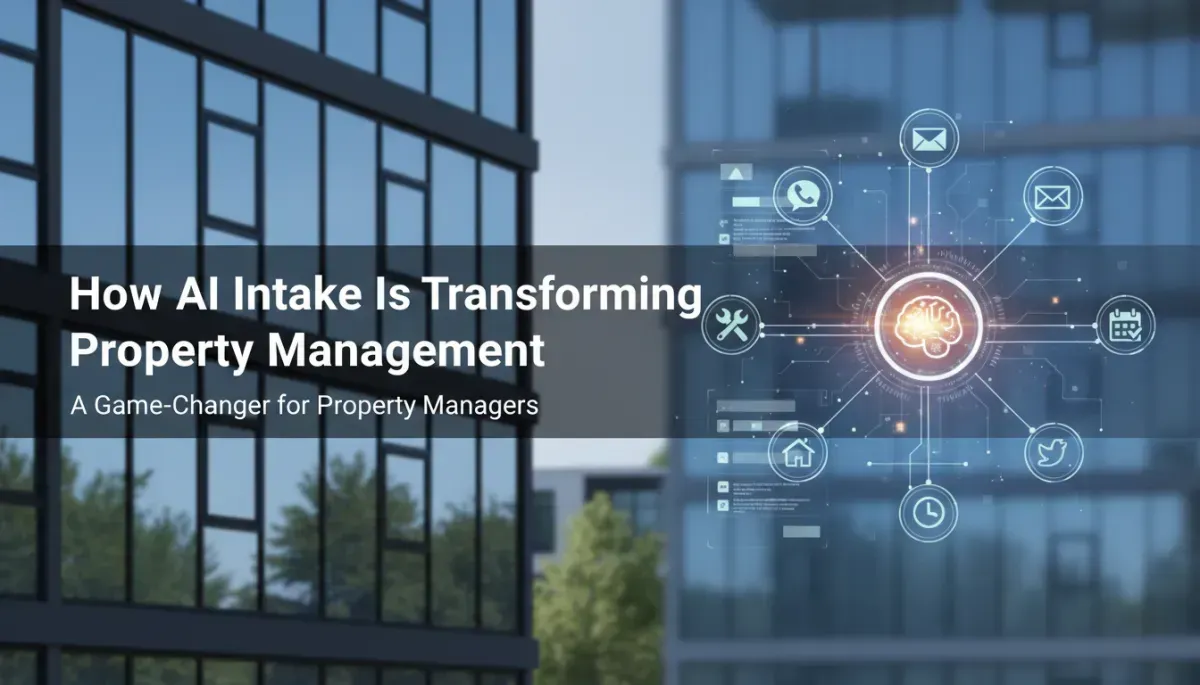
1. Tackling Leasing Inquiry Overload with AI Intake
Leasing season can feel like a tidal wave: calls, emails, texts, Facebook messages, Zillow leads, and pings from every listing site. Prospects ask the same questions repeatedly — rent, pet policy, parking, availability, move‑in dates — and expect immediate answers. When your team is juggling tours, renewals, and vendor coordination, it is easy for leads to slip through the cracks.
AI intake systems act as a 24/7 leasing assistant across all channels. Using natural language processing, they can understand and respond to inquiries in real time, whether they arrive by phone, web chat, SMS, or social media. According to multiple industry analyses, AI‑powered chat and virtual assistants are already improving tenant communication and boosting conversion rates in property management and real estate leasing.
- Answer common questions instantly: AI provides accurate, consistent information on pricing, availability, amenities, pet policies, utilities, application criteria, and lease terms — without waiting for a human to pick up the phone.
- Qualify renters automatically: The system can ask about move‑in timeframe, budget, household size, pets, and income, then determine whether a prospect meets your criteria before they ever speak with staff.
- Schedule tours on the spot: Once qualified, prospects can select from real‑time availability on your team’s calendar, whether for in‑person or virtual tours, with confirmations sent immediately.
- Send applications and follow up: AI intake can text or email application links, nudge prospects who started but did not finish, and send reminders before application deadlines or special promotions expire.
Imagine a Saturday afternoon at a busy apartment community: instead of missing calls while your team is out on tours, AI intake responds to every leasing inquiry, pre‑qualifies prospects, and fills your Monday calendar with confirmed, high‑intent showings. That is the power of AI property management in the leasing funnel.

2. Transforming Maintenance Request Intake into a Strategic Advantage
Maintenance is where resident satisfaction is won or lost. Leaks, heating failures, broken appliances, access issues, and noise complaints come in around the clock. When requests arrive through multiple channels — phone, email, portal messages, text — it is easy to misjudge urgency or lose track of details, especially in peak seasons or across large portfolios.
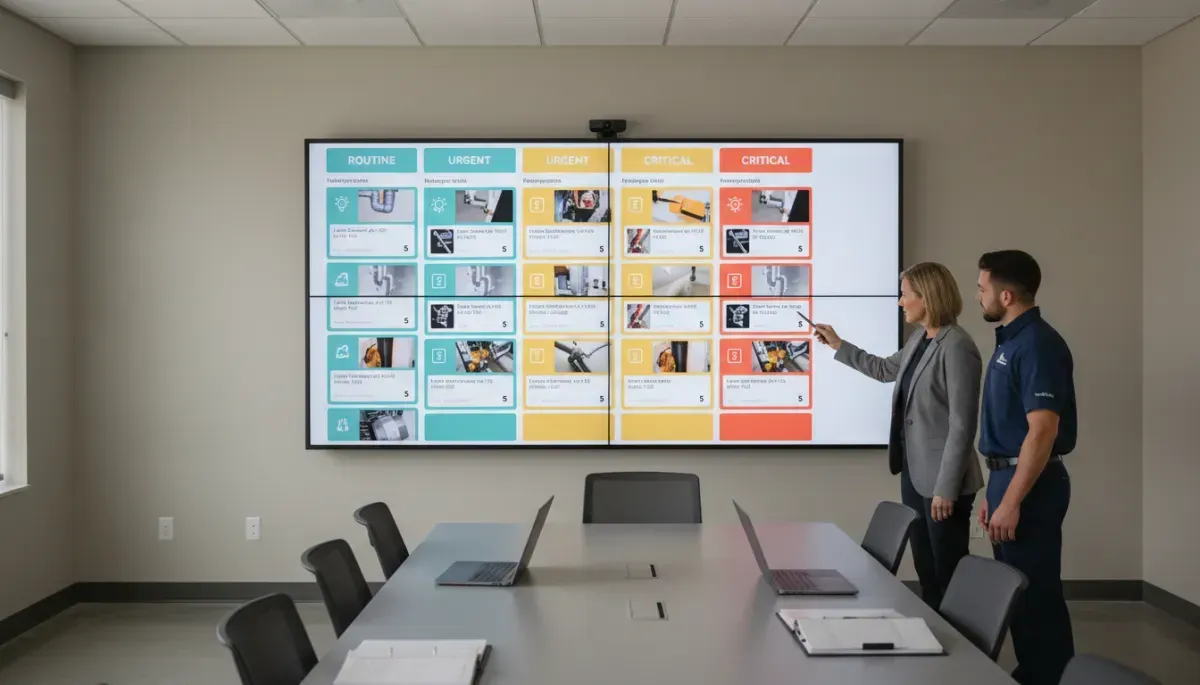
AI intake centralizes and structures maintenance requests the moment they come in. Instead of a vague voicemail saying “the sink is broken,” you receive a fully documented ticket with priority level, photos, and the right vendor already notified. This aligns with broader trends in predictive maintenance and automated workflows highlighted by leading property management and real estate research.
- Categorize and prioritize automatically: AI asks clarifying questions — “Is there active flooding?” “Do you have heat at all?” — then labels requests as emergency, urgent, or routine, following your custom rules and service level targets.
- Create work orders instantly: The system populates your maintenance or ticketing platform with unit details, problem description, resident contact information, and any attachments, eliminating manual data entry.
- Collect photos and videos: Residents can text or upload images and videos that AI attaches to the ticket, helping technicians diagnose issues before arriving onsite and ensuring they bring the right tools and parts.
- Route emergencies to the right people: For true emergencies, AI intake can escalate instantly — notifying on‑call maintenance, sending instructions to residents (e.g., how to shut off a water valve), and logging the entire interaction for compliance.
Over time, aggregated data from AI‑captured maintenance requests can feed into predictive maintenance strategies: spotting recurring issues by building, system, or vendor and helping you invest proactively rather than reactively. That is not just operational efficiency; it is a direct lift to NOI and asset value.
3. Reducing the Pain of After‑Hours Calls with AI Triage
Few things burn out property managers faster than after‑hours interruptions. A 2 a.m. call might be a genuine emergency — or it might be a non‑urgent noise complaint or a resident who misplaced their keys. Traditional answering services often lack context, misclassify issues, or simply pass along messages, leaving your team to sort through them the next morning.
AI intake offers intelligent triage for after‑hours calls and messages. Instead of a generic script, AI can reference your building policies, vendor contacts, and escalation rules to make smart decisions in real time.
- Distinguish emergencies from non‑emergencies: AI asks targeted questions to determine whether a situation meets your criteria for emergency response, reducing unnecessary wake‑up calls while still protecting residents and assets.
- Provide immediate guidance: For lockouts, plumbing issues, or power concerns, AI can walk residents through approved troubleshooting steps or policy‑based options (such as contacting a preferred locksmith).
- Escalate only when necessary: When an issue truly requires urgent attention, AI can call or text the on‑call technician, share the details it has gathered, and log the entire sequence automatically in your system.
The result is fewer middle‑of‑the‑night disruptions for your team, faster and more consistent responses for residents, and a documented, defensible process for handling risk‑sensitive situations — a combination many property managers find extremely attractive.
4. Automating Leasing Appointment Scheduling and Follow‑Through
Coordinating leasing appointments is one of the most repetitive tasks in property management. The back‑and‑forth emails, voicemails, and calendar checks consume hours each week — time that could be spent building relationships, managing renewals, or optimizing operations across your portfolio.
AI intake solutions are designed to remove this friction entirely. Once a prospect engages — whether from a listing site, your website, or a text campaign — the AI can handle the entire scheduling workflow end‑to‑end.
- Qualify before scheduling: AI confirms move‑in date, budget, unit type, and basic requirements so your team spends time only with viable prospects who match current or upcoming availability.
- Check calendars in real time: Integrated with your team’s calendars, AI offers only valid time slots, reducing double‑booking and manual rescheduling headaches.
- Send confirmations and reminders: Prospects receive automatic confirmations, directions, parking instructions, and reminders via text or email — dramatically lowering no‑show rates.
For busy leasing teams, the impact is immediate: fewer administrative tasks, more consistent follow‑up, and a smoother experience that prospects increasingly expect in a digital‑first rental market.

How Different Property Manager Types Benefit from AI Intake
Multi‑Family Property Managers
Multi‑family property managers often oversee multiple buildings or entire communities with hundreds of units. AI intake helps standardize processes across the portfolio: every leasing inquiry is answered consistently, every maintenance request is categorized the same way, and after‑hours calls follow uniform triage rules. This reduces variability between sites, shortens training time for new staff, and gives leadership clear data on performance, response times, and resident satisfaction trends.
Apartment Complex Operators
For operators focused on large apartment complexes, occupancy and reputation are paramount. AI intake ensures that no lead is ignored, even during peak leasing periods, and that maintenance requests are handled with visible professionalism. Automated updates — “Your work order has been created,” “Your technician is scheduled for tomorrow between 9 and 11 a.m.” — build trust and reduce inbound “status check” calls, allowing onsite teams to concentrate on tours, renewals, and community engagement.
Student Housing Management
Student housing is intensely seasonal and communication‑heavy. Leasing inquiries spike around application and move‑in periods, and residents are accustomed to texting and chatting rather than calling. AI intake fits perfectly here: it can manage high volumes of short, mobile‑first interactions, answer detailed questions about roommate matching, furnished units, and academic‑year leases, and coordinate group tours. On the maintenance side, AI helps filter out non‑urgent issues and reinforce community policies around noise, guests, and shared amenities, all while maintaining a friendly, conversational tone that resonates with students.
Short‑Term Rental Management Companies
Short‑term rental managers deal with constant guest turnover, late‑night arrival questions, and rapid‑fire maintenance needs. AI intake can function as a 24/7 digital concierge: confirming reservations, sharing check‑in instructions, answering questions about parking or Wi‑Fi, and triaging issues like cleaning problems or broken items. When something goes wrong between stays, AI can quickly notify housekeeping or maintenance vendors, attach photos from guests, and help keep tight turnaround schedules on track — all crucial for protecting ratings on major booking platforms.
Commercial Property Management
Commercial property management brings its own complexity: multiple tenants per building, specialized systems, and strict service level commitments. AI intake can differentiate between tenant types (retail, office, industrial), apply the correct response rules from each lease, and ensure that critical systems such as HVAC, elevators, and security receive priority handling. For leasing, AI can pre‑qualify prospects based on use type, square footage, and timing, then coordinate tours that include property managers, brokers, and prospective tenants without endless email chains.

Bringing It All Together
Across leasing inquiry overload, maintenance request intake, after‑hours calls, and leasing appointment scheduling, AI intake is reshaping what is possible in modern property management. Industry research points to a future — rapidly becoming the present — where AI and automation are not optional add‑ons but core infrastructure for efficient, tenant‑friendly operations.
For property managers of multi‑family communities, large apartment complexes, student housing, short‑term rentals, and commercial portfolios, the question is no longer whether AI property management tools will play a role, but how quickly you can put them to work. The portfolios that move first will benefit from faster response times, higher resident satisfaction, more predictable maintenance, and teams who are free to focus on strategy rather than constant firefighting.
Implemented thoughtfully, AI intake does not replace the human side of property management — it protects it. By taking over the repetitive, high‑volume front line, AI gives your team the time and clarity to deliver the personal, high‑quality service that keeps residents, tenants, and owners loyal for the long term.
To speak to an outbound agent click the following link: https://api.windsorseoservices.ca/widget/form/PS6wkehwVYD1QqcGS2em
How AI Intake Is Redefining Client Onboarding in Modern Law Firms
Artificial intelligence is rapidly reshaping legal services. One of the most immediate, high‑impact areas is the client intake process, where AI intake tools are helping firms respond faster, qualify matters more accurately, and deliver a smoother experience from the very first interaction.

From Manual Intake to Intelligent, Always-On Workflows
Key Benefits of AI Intake for Legal Services
24/7 Availability and Instant Response
Prospective clients rarely schedule their legal problems during business hours. AI intake tools provide
round‑the‑clock availability through web chat, mobile‑friendly forms, and virtual assistants. Instead of leaving a voicemail or waiting for a call back, clients can start the intake process immediately, receive confirmation, and often get initial guidance on next steps. This responsiveness signals professionalism and reduces the risk of losing high‑value matters to competitors who respond faster.
Faster Qualification and Triage
AI intake systems use adaptive questioning to quickly determine whether a matter fits your firm’s practice areas, jurisdiction, and risk profile. Based on the client’s responses, the system can:
- Flag urgent or high‑stakes cases for immediate review
- Route inquiries to the appropriate practice group or attorney
- Suggest alternative resources or referral options when a matter is not a good fit
This faster qualification means partners spend less time on screening calls and more time on winnable, profitable work—an important aspect of law firm automation that directly impacts realization rates.
Reduced Administrative Burden on Staff
For many firms, intake is a major drain on support staff. AI for lawyers is not about replacing people, but about offloading repetitive tasks so professionals can operate at the top of their license. Modern AI intake platforms can:
- Automatically populate CRM and practice management systems with client data
- Trigger conflict checks and basic risk assessments in the background
- Schedule consultations and send confirmations without human intervention
Tools such as Trailmate’s client‑facing digital employee and LegalOn’s intake agents illustrate how AI can execute entire workflows with attorney oversight, freeing teams from manual coordination and follow‑up emails.

Improved Client Experience from Day One
Client expectations are increasingly shaped by consumer technology—simple forms, clear status updates, and instant answers. AI intake supports a
modern, client‑centric experience by offering guided questionnaires, plain‑language explanations, and personalized portals where clients can upload documents, review next steps, and track progress. This aligns with trends highlighted by Thomson Reuters and other legal technology analysts, who emphasize that satisfaction in legal services now begins long before a matter is formally opened.
Greater Accuracy and Consistency in Data Collection
Inconsistent intake data leads to downstream issues: missed conflicts, incorrect billing details, and incomplete facts for early case assessment. AI‑driven client intake enforces structured data capture and uses validation checks to reduce errors. For example, systems can verify that dates are in valid ranges, flag missing mandatory fields, and cross‑check party names against existing matters to identify potential conflicts of interest. Over time, this structured data also enables more reliable analytics on conversion rates, matter types, and profitability.
📌 Key Takeaway: The real value of AI intake lies not only in speed, but in standardizing how information is captured and used across the firm.
Real-World Use Cases: How Firms Are Applying AI Intake Today
Across the legal industry, AI intake is being woven into broader legal technology ecosystems. A few illustrative scenarios include:
- High‑volume consumer practices (personal injury, immigration, family law) using AI chatbots on their websites to capture facts, estimate matter suitability, and schedule consultations without receptionist involvement.
- Construction‑focused services like Superlegal’s AI‑based model, where automated contract review is paired with streamlined intake to turn around redlines in under 24 hours at significantly lower cost.
- Corporate and in‑house teams using tools such as LegalOn’s AI agents to handle internal intake—capturing requests from business units, classifying them by risk and urgency, and routing them to the correct counsel with relevant documents already attached.

These examples reflect a broader movement: using AI intake as the front door to more advanced capabilities such as document automation, e‑discovery, and predictive analytics. Once high‑quality data is captured at intake, downstream tools—from agentic AI platforms like DISCO Cecilia AI to research systems like Lexis+ with Protégé—can operate more effectively.
Actionable Steps for Law Firms Considering AI Intake
1. Map Your Current Client Intake Workflow
Begin by documenting how client intake currently works: who answers calls, what questions are asked, which systems are updated, and where delays or errors occur. This process map will help you identify the highest‑impact areas for law firm automation and select AI tools that address specific bottlenecks rather than adding complexity.
2. Define Clear Objectives and Guardrails
Decide what success looks like: faster response times, higher conversion rates, reduced administrative hours, or improved client satisfaction. At the same time, establish guardrails for AI intake, including when a matter must be escalated to a human attorney, how conflicts are checked, and how sensitive data is stored and encrypted. Regulators and bar associations increasingly expect firms to maintain appropriate oversight of AI for lawyers, particularly in client‑facing contexts.
3. Choose Tools That Integrate with Existing Legal Technology
Look for AI intake solutions that connect seamlessly with your practice management, CRM, document management, and calendaring systems. Platforms that leverage open connectors—such as the legal plugin suites emerging around leading AI models—reduce duplicate data entry and support a single source of truth for client information. Integration is critical for realizing the full value of legal technology investments.

4. Pilot, Measure, and Refine
Start with a limited pilot—perhaps one practice area or a subset of website inquiries. Track metrics such as time to first response, percentage of qualified leads, staff hours saved, and client satisfaction scores. Collect qualitative feedback from attorneys and staff on the quality of information they receive. Use these insights to refine intake questions, escalation rules, and messaging before rolling out firm‑wide.
5. Train Your Team and Communicate with Clients
Successful AI intake is as much about change management as it is about technology. Provide training so attorneys and staff understand what the AI does, where its limits are, and how to review and supplement its outputs. Be transparent with clients that they are interacting with an AI‑enhanced system that helps the firm respond more quickly, while emphasizing that legal advice ultimately comes from qualified professionals.
The Strategic Case for AI Intake in Law Firms
As competition intensifies and clients demand more value, law firm leaders must scrutinize every stage of the client journey. AI intake offers a practical, immediately useful entry point into law firm automation—one that improves 24/7 responsiveness, accelerates qualification, reduces administrative burden, enhances client experience, and increases the accuracy of the data that underpins your practice. For firms willing to invest thoughtfully and maintain strong professional oversight, AI intake is no longer a speculative experiment; it is a strategic capability that can differentiate your legal services in a crowded market.
To speak to an outbound agent click the following link: https://api.windsorseoservices.ca/widget/form/PS6wkehwVYD1QqcGS2em
How AI-Powered Property Calculators Are Transforming Real Estate Decision-Making
AI-driven property calculators are reshaping how property managers and investors evaluate deals, manage risk, and optimize returns—turning complex financial analysis into fast, data-backed decisions.

1. The new convergence of AI and property management tools
The property management software market is expanding rapidly—projected to reach nearly USD 5.9 billion by 2033—with AI at the center of that growth. Leading platforms such as Yardi Voyager, AppFolio AI+, and RealPage already use machine learning for pricing, maintenance, and tenant engagement. In parallel, a quieter revolution is underway in a more focused corner of the tech stack: AI-powered property calculators.
Instead of wrestling with static spreadsheets, today’s property managers and real estate investors rely on real estate calculators that integrate AI, live data, and scenario modeling. Platforms like rentalpropertycalculators.com are taking this a step further—using AI intake forms to capture your specific goals, risk tolerance, and property profile, then generating tailored outputs for each asset type and strategy.
Whether you manage a downtown office tower, a residential portfolio, or an industrial warehouse network, AI-powered property calculators now provide the kind of fast, scenario-based insight that used to require a full analyst team.
2. Commercial property managers: precision with cap rate, NOI, and lease analysis
Commercial property managers operate in a world of tight margins and high stakes. A small miscalculation in net operating income (NOI) or vacancy assumptions can translate into millions in lost value. AI-enhanced commercial property calculators at rentalpropertycalculators.com are designed to reduce that risk and sharpen every decision.
- Cap rate calculators: Instantly evaluate whether a proposed acquisition or lease restructuring aligns with your target yield, adjusting for operating expenses, market rent, and stabilization timelines.
- NOI calculators: Break down revenue and expense line items across mixed-use, office, and retail properties, stress-testing NOI under different rent, expense, and vacancy scenarios.
- Lease analysis calculators: Compare lease structures—gross, net, modified gross—and model escalation clauses, free rent periods, and tenant improvement amortization to understand true effective rent.
- Vacancy cost calculators: Quantify the real cost of downtime, including lost rent, concessions, and re-leasing expenses, then use AI-driven scenarios to prioritize retention and backfill strategies.
Instead of manually updating spreadsheet assumptions, you answer a few targeted questions in an AI intake form—property type, lease structure, market, risk appetite. The system then configures the right commercial property calculator template, pre-populates key assumptions, and surfaces metrics that align with your role and objectives.

3. Residential property managers: clarity on rental yield, cash flow, and financing
Residential property management is increasingly data-driven. Platforms like AppFolio AI+ already use machine learning for rent optimization, but day-to-day portfolio decisions still hinge on clear, property-level math. A robust rental property calculator bridges that gap—especially when it is tailored to your asset mix and strategy.
- Rental yield calculators: Quickly compare gross and net yields across single-family, small multifamily, and larger residential communities, incorporating maintenance reserves, management fees, and local taxes.
- Cash flow calculators: Model monthly and annual cash flow, test rent increases, and quantify the impact of vacancy changes or capital improvements on distribution schedules.
- Mortgage and financing calculators: Assess fixed versus variable rates, interest-only periods, and amortization schedules, then overlay those outcomes with your rental income projections.
On rentalpropertycalculators.com, residential property managers can use AI-guided forms to specify unit mix, average lease term, delinquency patterns, and local market conditions. The platform’s real estate calculators then surface customized dashboards—highlighting metrics like cash-on-cash return, DSCR, and break-even occupancy—so you can communicate performance clearly to owners and investors.
4. Industrial property managers: specialized ROI and logistics analysis
Industrial assets—warehouses, distribution centers, last-mile facilities—operate on a different set of performance drivers. Location, throughput, and logistics cost structures matter as much as rent. That is why generic spreadsheets often fall short and why tailored industrial property ROI calculators are gaining traction.
- Warehouse ROI calculators: Evaluate return on investment by combining base rent, loading dock capacity, ceiling height, and automation readiness with capex and operating costs.
- Logistics cost calculators: Incorporate transportation costs, labor availability, and proximity to customers to understand how a site supports total landed cost targets.
- Lease-versus-buy analysis calculators: Compare long-term lease obligations with ownership scenarios, factoring in depreciation, tax benefits, and residual value assumptions.
With AI-powered property calculators on rentalpropertycalculators.com, industrial managers input operational details—turn times, average shipment volume, automation level—and receive tailored financial outputs. This allows you to align site-level decisions with corporate supply chain strategies and investor expectations, without building bespoke models from scratch each time.
5. Real estate investors: deal analysis, portfolio performance, and refinancing
The latest generation of real estate investor tools—from DealRun to BiggerPockets calculators—reflects a broader trend: integrated, scenario-based analysis that goes beyond simple ROI. Investors now expect to run full deal diagnostics in minutes, on any device, and compare opportunities across markets and strategies.
- Deal analysis calculators: Evaluate acquisitions using metrics such as IRR, equity multiple, cap rate, and cash-on-cash return, while stress-testing rent, expense, and exit assumptions under best-, base-, and worst-case scenarios.
- Portfolio performance calculators: Aggregate property-level data to understand portfolio-wide yield, leverage, and risk concentrations by geography, asset class, or strategy.
- Refinancing and recapitalization calculators: Model rate changes, LTV shifts, and cash-out scenarios to determine whether to refinance, hold, or exit—critical in a rate-sensitive environment.
At rentalpropertycalculators.com, investors can leverage AI-guided real estate calculators that adapt to strategy—value-add, core-plus, BRRRR, or long-term hold. The platform’s AI property analysis capabilities help you benchmark deals against historic and projected performance, supporting faster, more confident investment decisions.
6. AI intake forms: from raw inputs to personalized calculator outputs
The real innovation behind platforms like rentalpropertycalculators.com is not just the formulas—it is the AI intake engine that sits in front of them. Instead of presenting a generic form with dozens of fields, the system asks adaptive questions based on who you are and what you are trying to achieve.
- A commercial property manager might be asked about lease structures, expense recoveries, and tenant mix, triggering a commercial property calculator workflow focused on NOI, cap rate, and lease economics.
- A residential manager might see prompts around unit count, turnover, delinquency, and rent control, surfacing a tailored rental property calculator with yield and cash-flow metrics front and center.
- An industrial operator might be guided through loading capacity, shipping volumes, and automation plans, activating industrial property ROI and logistics cost calculators.
Behind the scenes, the AI maps your responses to the right formulas, default assumptions, and output views. The result is a set of personalized calculator outputs—clear dashboards and metrics that match your role, your asset type, and your time horizon, without manual configuration.

7. The future: AI-driven property analytics and automated recommendations
Industry research from firms like McKinsey and PwC points to a clear trajectory—AI will continue to deepen its role in real estate, moving from descriptive analytics to predictive and prescriptive insights. For property calculators, this means three major shifts.
- Dynamic, data-rich inputs: Calculators will increasingly pull in live market data—vacancy rates, tax changes, insurance trends—reducing manual data entry and improving accuracy.
- Scenario engines and stress testing: Advanced models will automatically generate upside and downside cases, highlighting sensitivity to rent, interest rates, and exit cap rates, much like institutional-grade underwriting tools.
- Automated recommendation engines: Beyond showing results, AI will suggest actions—refinance versus hold, lease versus buy, value-add versus disposition—based on your historical preferences, risk profile, and portfolio objectives.
As AI-native platforms such as MagicDoor demonstrate in property operations, high levels of automation are possible without sacrificing control. Applied to AI property analysis and calculators, this same approach will give managers and investors a continuously updated, recommendation-driven view of their real estate decisions—turning static models into living strategy tools.
8. Take action: access free, customized calculators at rentalpropertycalculators.com
For property managers and investors, the question is no longer whether AI will change real estate decision-making—it already has. The real question is whether your organization will keep relying on static spreadsheets, or embrace tools designed for the speed and complexity of today’s markets.
rentalpropertycalculators.com offers a focused, practical way to get started. In a few minutes, you can:
- Complete an AI-guided intake tailored to your role—commercial, residential, industrial, or investor.
- Access free customized calculators aligned with your property type and strategy.
- Generate clear, exportable outputs you can share with owners, partners, and lenders.
If you manage commercial, residential, or industrial assets—or if you are actively evaluating new acquisitions—now is the time to upgrade your toolkit. Visit rentalpropertycalculators.com today to explore their AI-powered property calculators, streamline your analysis, and make faster, more confident real estate decisions.
To speak to an outbound agent click the following link: https://api.windsorseoservices.ca/widget/form/PS6wkehwVYD1QqcGS2em
How an AI Agency and a Business Establish a Strategic Partnership for Workflows
Discover how partnering with a specialized AI agency can transform your everyday workflows into scalable, automated systems that save time, cut costs, and unlock new revenue across your entire business.

Why Businesses Are Turning to AI Agencies for Workflow Automation
For many business owners, AI tools for business feel both exciting and overwhelming. You know there is enormous potential in AI workflows, but you may not have the in-house expertise, time, or resources to design and maintain them. That is where a dedicated AI agency comes in: as a strategic partner focused on building, integrating, and optimizing workflow automation tailored to your operations.
Instead of testing random tools in isolation, a strategic partnership aligns automation with your business goals. Whether you run a real estate brokerage, healthcare clinic, retail store, law firm, or service-based company, an AI agency can help you turn fragmented processes into streamlined business automation that works reliably in the background.
Step 1: Initial Discovery — Understanding the Business and Vision
Every effective strategic partnership begins with a discovery conversation. The AI agency meets with key stakeholders to understand your business model, current challenges, and long-term goals. This is not a technical deep dive yet; it is about uncovering where your time and money are currently being spent, and where delays or bottlenecks are hurting growth.
- What are your most repetitive, manual tasks?
- Where do leads or customers fall through the cracks?
- Which processes are critical for revenue, but still handled by spreadsheets or email threads?
For example, a real estate team may highlight slow follow-up with online inquiries, while a healthcare clinic might struggle with missed calls and appointment scheduling. These insights shape the roadmap for AI-powered workflow automation.
Step 2: Needs Assessment and Opportunity Analysis
Next, the AI agency performs a structured needs assessment. This often includes reviewing existing systems, CRMs, booking tools, communication platforms, and any current automations. The goal is to identify quick wins and high-value opportunities for AI workflows that deliver measurable business value.
💡 Pro Tip: Focus first on workflows directly tied to revenue or customer experience—such as lead response, consultations, and renewals—before automating internal back-office tasks.
At this stage, the agency will also align expectations: what success looks like, which metrics matter (response time, show-up rate, conversion rate, average order value), and how to measure time savings and cost reduction from automation.
Step 3: Workflow Mapping — From Manual Tasks to AI-Powered Systems
Once priorities are clear, the AI agency maps your current workflows step by step. This visual map shows how leads, customers, and data move through your business today—and where automation can take over. Then, the agency designs the “future state” powered by AI and CRM automation.

For example, a mapped lead nurturing sequence might look like:
- Lead submits a form on your website.
- AI receptionist sends a personalized confirmation message within seconds.
- Workflow checks your calendar and proposes appointment times automatically.
- Once booked, reminders and follow-up sequences run without manual effort.
This approach works across industries—retail can automate abandoned cart follow-ups, law firms can streamline consultation bookings, and healthcare providers can coordinate reminders and intake forms.
Step 4: Integration Planning and Technology Selection
With workflows mapped, the AI agency designs how everything will connect. This includes selecting the right AI tools for business, determining which platforms will serve as your central source of truth, and planning the data flows between your CRM, website, messaging channels, and internal systems.
- CRM integrations: Ensuring leads, customers, and activities are automatically logged and updated.
- Communication channels: Connecting email, SMS, chat, and voice to AI-driven workflows.
- Security and compliance: Especially important for healthcare and legal businesses handling sensitive data.
A well-designed integration plan ensures your business automation is not a patchwork of disconnected tools, but a cohesive system that scales with growth.
Step 5: Implementation, Testing, and Refinement
Implementation is where the AI agency builds your AI workflows, configures CRM automation, and sets up AI receptionists and communication sequences. Rather than launching everything at once, a strong partner rolls out workflows in controlled phases, validating each step with real data and user feedback.

During testing, the agency monitors:
- Response times for AI receptionists and automated messages.
- Accuracy of data syncing between tools and your CRM.
- Customer reactions and engagement with new automated touchpoints.
Feedback from your team is essential. If your sales staff needs different notifications or your front desk wants a different tone of voice, the AI agency adjusts the workflows until they fit seamlessly into daily operations.
Real-World Workflow Use Cases Across Industries
A powerful benefit of partnering with an AI agency is access to proven patterns from many industries. Here are core use cases that drive results for real estate, healthcare, retail, law firms, and service businesses alike:
- Lead nurturing automations: Automatically send educational content, case studies, and reminders tailored to where prospects are in their journey, increasing conversion without extra manual follow-up.
- Appointment scheduling: AI receptionists and booking workflows propose times, handle rescheduling, and send confirmations, dramatically reducing no-shows and phone tag.
- Follow-up sequences: Structured post-visit or post-purchase follow-ups to request reviews, offer upsells, and keep customers engaged over time.
- CRM integrations: Automatic creation and updating of contacts, deals, and tasks so your team always works from accurate, up-to-date information.
- AI receptionists: Intelligent chat or voice assistants that answer common questions, qualify leads, and route inquiries 24/7, without sacrificing a human tone.
- Customer communication automation: Coordinated email, SMS, and chat campaigns that trigger based on behavior—such as missed appointments, contract renewals, or repeat purchases.
These workflows are flexible enough to support a solo consultant, a multi-location clinic, or a fast-growing e-commerce brand—because they are built on scalable AI tools for business.
The Business Value: Time, Cost, Revenue, and Scalability
A strategic partnership with an AI agency is not just about technology; it is about business outcomes. Well-designed workflow automation consistently delivers value in four key areas:
- Time savings: Repetitive tasks like data entry, appointment reminders, and basic customer questions are handled automatically, giving your team hours back each week to focus on higher-value work.
- Cost reduction: Automation reduces the need to hire for purely administrative roles and lowers the risk of costly human errors, such as missed leads or misfiled information.
- Revenue growth: Faster response times, consistent follow-up, and personalized nurturing naturally improve conversion rates, average order value, and customer lifetime value.
- Scalability: As your business grows, your AI workflows handle higher volumes without a proportional increase in staffing or operational complexity.
📌 Key Takeaway: AI-powered business automation is not a one-time project; it is an evolving system that compounds value as your company grows and your partnership with the AI agency matures.
Ongoing Optimization: The Long-Term Value of a Strategic Partnership
After launch, the most successful businesses treat their AI agency as a long-term partner, not just a one-off vendor. Together, you review analytics, test new messaging, add branches to workflows, and incorporate new capabilities as tools and customer expectations evolve.
Over time, your automation becomes smarter and more profitable: AI receptionists learn better responses, lead scoring improves, and your CRM automation surfaces the highest-value opportunities for your team each day. This continuous improvement cycle is what separates businesses that dabble in AI from those that truly leverage it as a competitive advantage.
Partner with Windsor SEO for AI Workflow Automation
If you are ready to move beyond scattered tools and build a cohesive system of AI workflows, Windsor SEO can help. As an experienced AI agency, we specialize in designing, implementing, and optimizing workflow automation for growth-focused business owners and entrepreneurs across industries.
From lead nurturing automations and appointment scheduling to AI receptionists, CRM integrations, and customer communication automation, we create AI tools for business that are practical, measurable, and aligned with your goals. Our team works closely with you to ensure every workflow supports your strategy, your brand voice, and your customers’ experience.
Ready to explore what a strategic partnership with an AI agency can do for your workflows?
Reach out to Windsor SEO today to schedule a discovery call. Together, we will map your processes, identify your highest-impact automation opportunities, and build an AI-powered foundation that helps your business save time, reduce costs, grow revenue, and scale with confidence.
To speak to an outbound agent click the following link: https://api.windsorseoservices.ca/widget/form/PS6wkehwVYD1QqcGS2em